When I Knew

The title is misleading. The question I still ask myself is not, “When did I know I was Jewish?” but, “How, in God’s name, did I not figure it out sooner?” I blame Captain von Trapp.

I cannot remember a time when I did not know the story of how my grandmother fled Czechoslovakia, weeks after the Germans invaded, with my two-year-old father in tow, to meet my grandfather in London (the story of how he got to London, however, remained a secret until much more recently). She was a great storyteller, and in her version, she was not a bold heroine, but a foolish and somewhat spoiled girl, slightly oblivious of the danger around her. I heard many times about how she charmed the Gestapo at the border into letting them leave, how they had to stay in Versailles, and how my grandmother abandoned my father every morning to the tender ministrations of “la promeneuse” so she could hot-foot it to Paris, and later, of their life in London and Wales, of ration cards, and air raids, and shoes that unaccountably did not get polished when you left them outside your door at night. What I did not hear anywhere attached to the story was the word, “Jew.” It was a word I never heard used by any member of my family, in any context.

And that is where the Sound of Music comes in. I saw it for the first time a long time ago, long enough ago that I remember standing for the national anthem before it began. My grandparents had come to visit in Toronto, and we all went together. And there, on the screen, was their story, their love for their homeland, the evil Nazis, and their flight to freedom. They even lived high on a hill with a lonely goatherd, in a Swiss Chalet. In Quebec. Here it is:
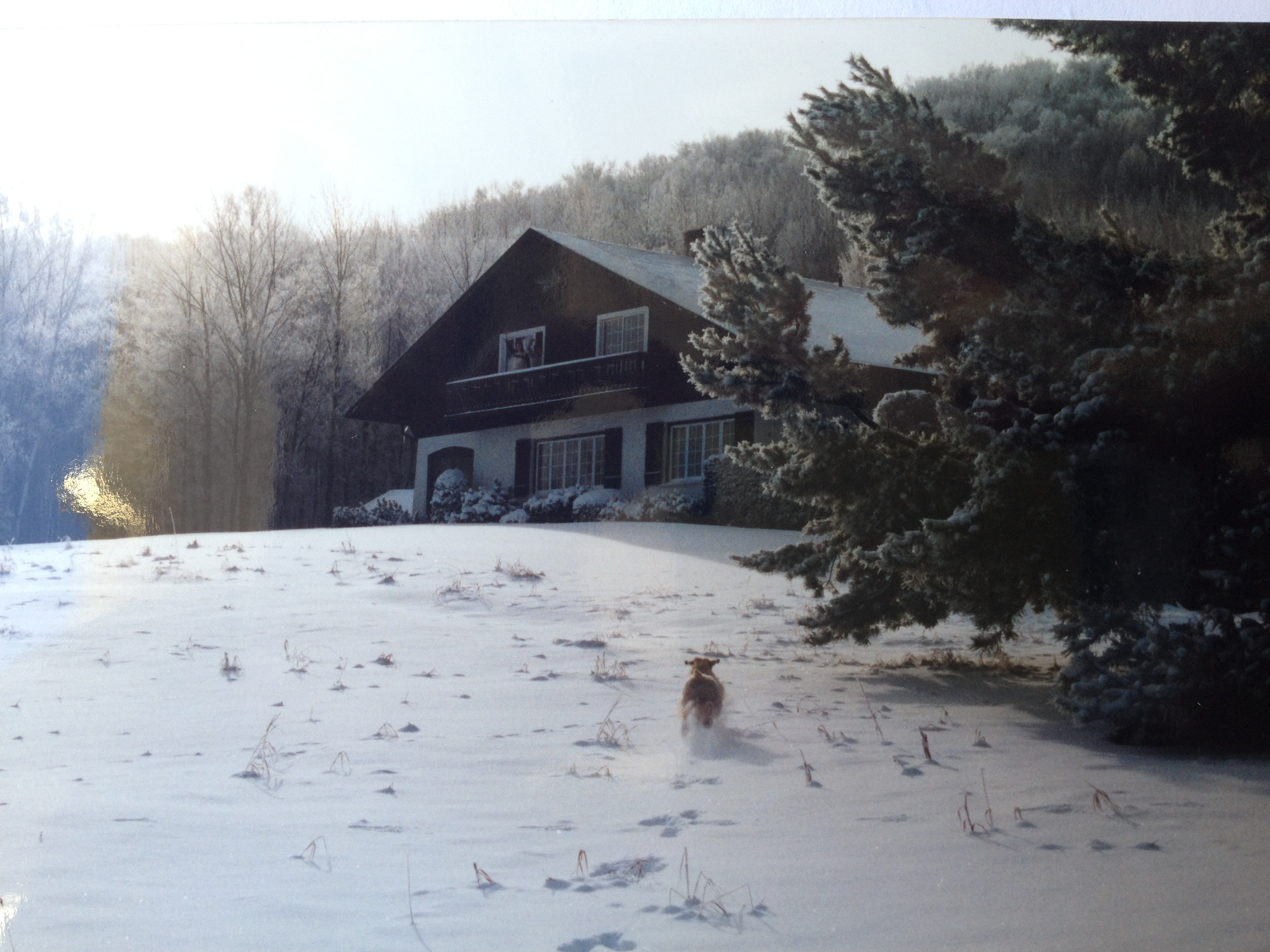
Granny and Gumper's house in North Hat;ley

When the Captain sang “Edelweiss,” my mother says, tears rolled down my grandfather’s cheeks. Bless my homeland forever.

And once again, not a mention of the word “Jew” in the whole movie (Weirdly, when you think about it. Sure, the von Trapps weren’t Jewish. But Max? Max?). No wonder I was confused as the evidence began mounting and the questions started to come. Because I knew, I knew. But I didn’t know. I read When Hitler Stole Pink Rabbit and then all the Leon Uris books. I had dreams about being chased by Nazis. I even wrote a short story for school about a young girl, oh roughly my age at the time, escaping. I asked my father where our name came from. He lied (Miners from Lancaster come to work in the Silesian coal fields. I still have not forgiven him for this one!). I asked him why Gumper was smart enough to leave when others didn’t (you can tell I am getting close at this point). I asked my grandfather what happened to his two sisters. He left the room, and my grandmother changed the subject. I knew we weren’t Catholic, like all the other Czechs I knew, though when my grandfather swore, it was by Jesus and Mary (this also threw me off). Did I think they were Hussites? But no, the von Trapps weren’t Jewish. You didn’t have to be Jewish to flee the Nazis. It wasn’t a question about myself that I asked; it was one I had already answered.

Then cousin Frances came for one of the last Christmases before my grandfather and father died, and this time brought with her a family tree. On it were large branches that were missing, unknown relatives marked only “died in the war.” And Frances told us that we had a Jewish background. I didn’t fully absorb it, confused as I still was by the Captain. Maybe Gumper’s mother had been Jewish?

After my father died, my uncle sat me and my sister down with my mother and told us the story of our origins and swore us to secrecy. My mother already knew; my father had told her before they were married in an offhand way, and she regarded it as a matter of complete indifference. We didn’t keep it a secret; we started talking about our background and history with our father’s cousins, and with our grandmother, especially when we travelled with her to the Czech Republic after the wall came down. My sister remembered revealing all to our Kitchener cousins when we visited them for Christmas a couple of years after our father’s death.

For me this knowledge came, not as a revelation but as a confirmation, an “Oh, of course.” It was like I had spent my life doing a puzzle without the picture on the box, trying to piece together the faces I saw from the pieces I had. Someone handed me some missing pieces and suddenly all the sections I had been working on began to fit together. And on the woman’s face, the pieces now formed a smile.
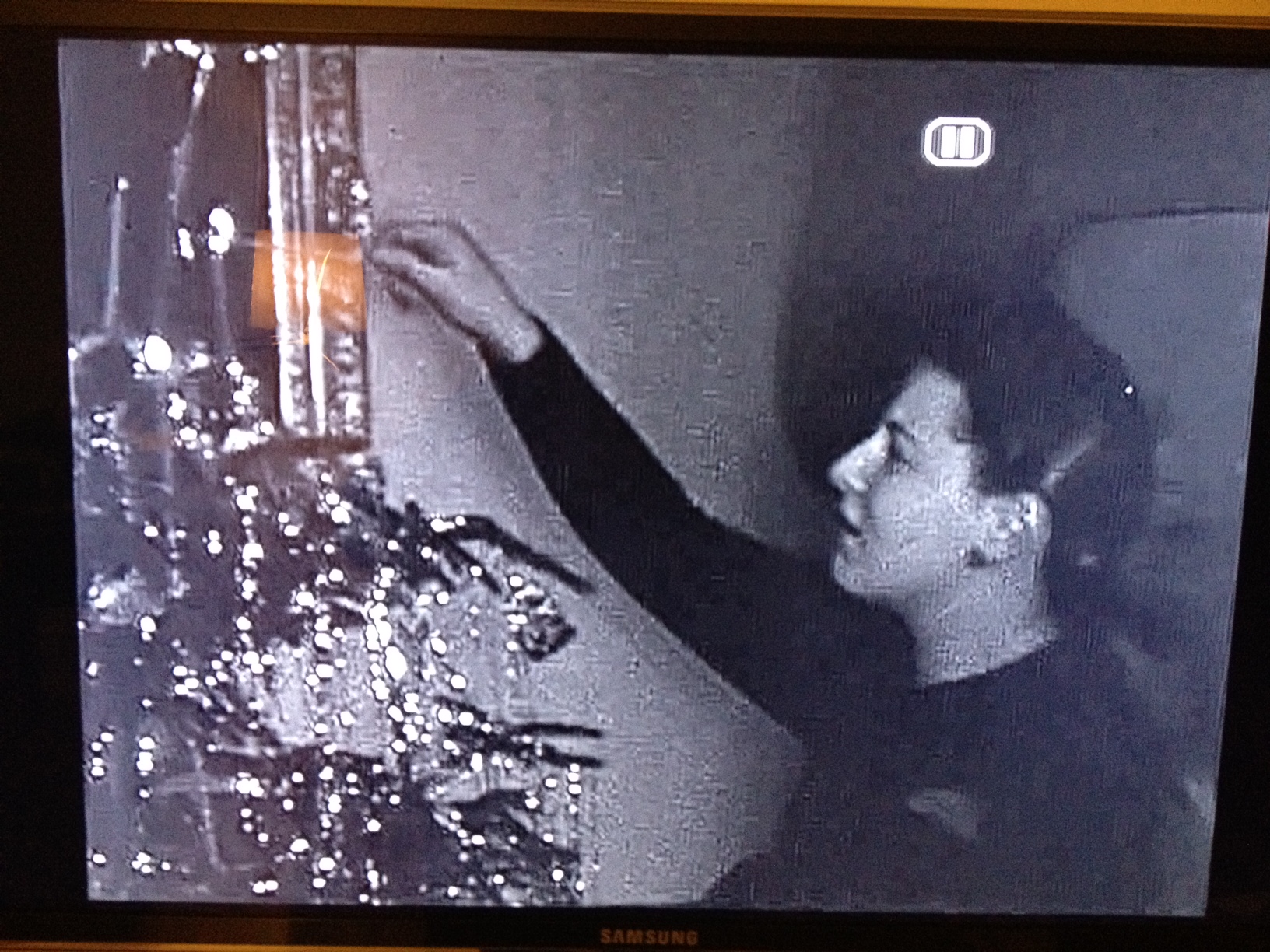
Christmas at the Picks

Christmas 1939

The official part of Christmas with my new family is over, and I have an evening alone, as the rest of them go out to shop, eat, and watch a movie, as is their usual custom on Boxing Day. We have been talking a lot about what our Christmas traditions are over the past few days, as we attempt to merge our practices and rituals, honouring what is most important to all of us. Like most of us, I have had a series of Christmas traditions, depending on where I lived and who I was living with at the time, but if you ask me what I think of when I think of Christmas, it isn’t Toronto in the 1970s or Detroit in the 1990s; it is spending Christmas in North Hatley, for many years at the incongruous Swiss chalet on a Quebec hillside house built my Gumper, my grandfather Jan Pick, and later also at our own cottage. It was always our family and my grandparents; sometimes our cousins from Kitchener joined us, and in later years, my father’s cousin Frances would come from Mexico.

What did it mean to us? It was the light in the darkness of winter. We feasted and burned candles. We skied through the woods and snowmobiled, and chopped down a tree, bringing the freshness of the forest indoors. The ornaments were battered and glittering survivors of those collected by my grandparents in their years as exiles and refugees from their native Czechoslovakia. We ate fish soup, and herring, and salmon, and eel. We ate turkey and plum pudding, and spiced beef. We ate candied orange peel, truffles, florentines, pepperkakor, vanilkove rohlicky, rum balls, Turtles, mince pies, and shortbread.  We opened a mountain of presents (This was the only part my grandfather did not like — he thought we had too many presents, and he was right. And it only got worse when the Kitchener Picks joined us!). And like the Whos down in Whoville what we did most of all was sing. At Christmas Eve dinner, the apex of our feast, we would sing and sing and sing, songs in English and French; Czech, Slovak, Swedish, and Hungarian. Some were toasts and drinking songs, some were folk songs; we sang songs about the black earth of my grandparents’ homeland and about battles fought in far off Herzigovina; we sang songs my grandfather learned as a student in France and songs my mother grew up singing around a Swedish Christmas smorgasbord. We banished the darkness and drew our family together around the table. It was this family we were celebrating as we sang, especially my grandparents, especially my grandfather.

The Picks were Jewish of course, and it may be surprising for some of you to read that Christmas was so important to them. It is one of the curiosities of the ways a culture borrows from another that many Czech Jews celebrated Christmas with as much enthusiasm as their neighbors, albeit with less piety. I remember my grandmother taking about childhood Christmasses, about the carp who would come to live in the bathtub to be cleaned of its muddy interior before it would be eaten on Christmas Eve. And their family was not alone. My grandfather’s best friend from the old country was a man who survived Auschwitz and wrote a memoir of his experiences. “It was a very sad Christmas for the Jews this year,” he wrote without irony about Christmas 1939 in occupied Czechoslovakia.

The grainy photo at the top, which shows my grandmother, Liska, lighting the candles on a Christmas tree, is a still from a movie made by our cousin Frances’s father at Christmas in 1939 in the UK. He and my grandparents and my father, Michael, had managed to escape there. Also in this film are my father’s young cousins, Peter and John, kindertransport children who had been saved by Nicholas Winton, and my great grandmother Ruzena, whose necklace I wore at our own Christmas dinner last night. The people in the film are all people I knew well, so even though the film is silent I can tell what they are saying and even what they are thinking, as they greet Father Christmas, and praise my father for riding his first tricycle. And I can see the moment when the mood grow dark and they raise a toast their friends and family left behind — my grandmother’s parents, my grandfather’s sisters, all to perish, with so many more — and my grandmother knocks back her drink, and stiffens her jaw and smiles again, prepared to defy the darkness for another year.


Ten Books That Have Stayed With Me

I was tagged by Julianne Douglas over on Facebook to quickly write down ten books that have meant something to me, and then pass along the request to ten more people. I can’t do anything the easy way, so I thought it would be fun to do a blog post about it, and to explain why these books are important to me. Since it is the time of year when many people are looking for gift ideas, maybe even some of what I say will provide some inspiration. I am going to stick close to historical fiction for my list, since I have been thinking a lot recently about what makes good historical fiction in general, and medieval historical fiction in particular.

  1. Sigrid Undset, Kristin Lavransdattir. It is maybe cheating to begin with this because I have about fifty more pages to go, but it was reading this book that got me thinking about medieval historical fiction in the first place. Somehow Undset managed to write here a novel that continues to speak immediately to contemporary themes and problems, while at the same time maintaining a perfect period voice. I have not discovered one jarring note (though specialists in medieval Scandinavia might feel differently). I am thinking of how I could work it into a course.
  2. Cecelia Holland, Great Maria. This novel is another of the first that comes to mind when I think of other books I have loved that, for me, capture the Middle Ages and its values perfectly. Its heroine is awkward and difficult, and unsympathetic at times. This is because she thinks and feels and acts differently than we would do. This is because she lives in a very different world, and Holland does not allow us to forget it.
  3. Margaret Elphinstone, The Sea Road. This one will be less well known even to my book-reading and medievalist friends. It is the eleventh-century tale of Gudrid, as told to a cleric and scribe in Rome, of her role in the Viking exploration of the North Atlantic and her own journey to North America. Gudrid’s world is pagan and Christian, civilized and wild and once again, Elphinstone gets her voice perfectly. I should also say that everything Elphinstone writes is an instant hard-cover buy for me.
  4. J.R.R. Tolkien, The Lord of the Rings. This isn’t historical fiction, most would argue, but rather fantasy. I am going to argue that it belongs on this list of books that made me think about how to write historical fiction. Tolkien’s Middle Earth is not some fantasy realm in some imaginary world, however it may appear to a casual reader. He binds it to the geography and language of the word that we know, the world that is ours, by creating stories told about stories told about stories, layering the past upon the past.
  5. Carlos Ruiz Zafon, Shadow of the Wind. I saw that Julianne had The Angel’s Game on her list which I unaccountably still have not read, though I went to an author reading when it first came out, and got a signed copy. This one is a book about books by a man who loves books. More than that, Ruiz Zafon casts a spell on the reader from the very first page. We are in post-civil war Barcelona with all its beauty, menace, and danger until the last page when he lets us go again.
  6. Susanna Clarke, Jonathan Strange and Mr. Norrell. This is the perfect book for someone raised on Georgette Heyer and Jane Austen. Like Heyer, she captures that Regency voice without anachronism, and at the same time manages to work in the magic in a way that seems seamless and plausible.
  7. Hilary Mantel, Wolf Hall. Hilary Mantel in her best historical fiction, here and in A Place of Greater Safety, about the French Revolution not only writes a historical novel, but constructs a historical argument. Here, her argument is a revisionist portrait of Thomas Cromwell. Usually he is depicted as the most hated of Henry VIIIs servants, but Mantel gives us a view of him from the inside to present him as a more sympathetic character. Her depiction of Thomas Wolsey and Thomas More were equally daring.
  8. Sarah Dunant, Sacred Hearts. Most people would think that a story that takes place entirely within the walls of a tightly enclosed sixtenth-century Ferarrese convent would not be interesting. Those people would be wrong. I read this shortly after teaching a class on Terese of Avila’s autobiography and felt it gave flesh to some of the bones of what Teresa describes.
  9. Markus Zusak, The Book Thief. I have already discussed this book on my blog, so I won’t say too much here except that this is another book about books (I am detecting a theme here…), and it made me have sympathy for characters I thought I could not feel sympathy for.
  10. Simon Mawer, The Glass Room. The story of the twentieth-century told through a modernist house built in what was once Czechoslovakia, this one hits close to home. Not only does it depict the world of my ancestors, the world into which my father was born, and the pain of going into exile from that world, the characters themselves reflect elements of members of my family. This may, then, seem less strictly “historical” than the other works on my list. But whether a book takes us to Tang China or Renaissance Italy, surely we love it because we see parts of ourself in it?

TBR Pile

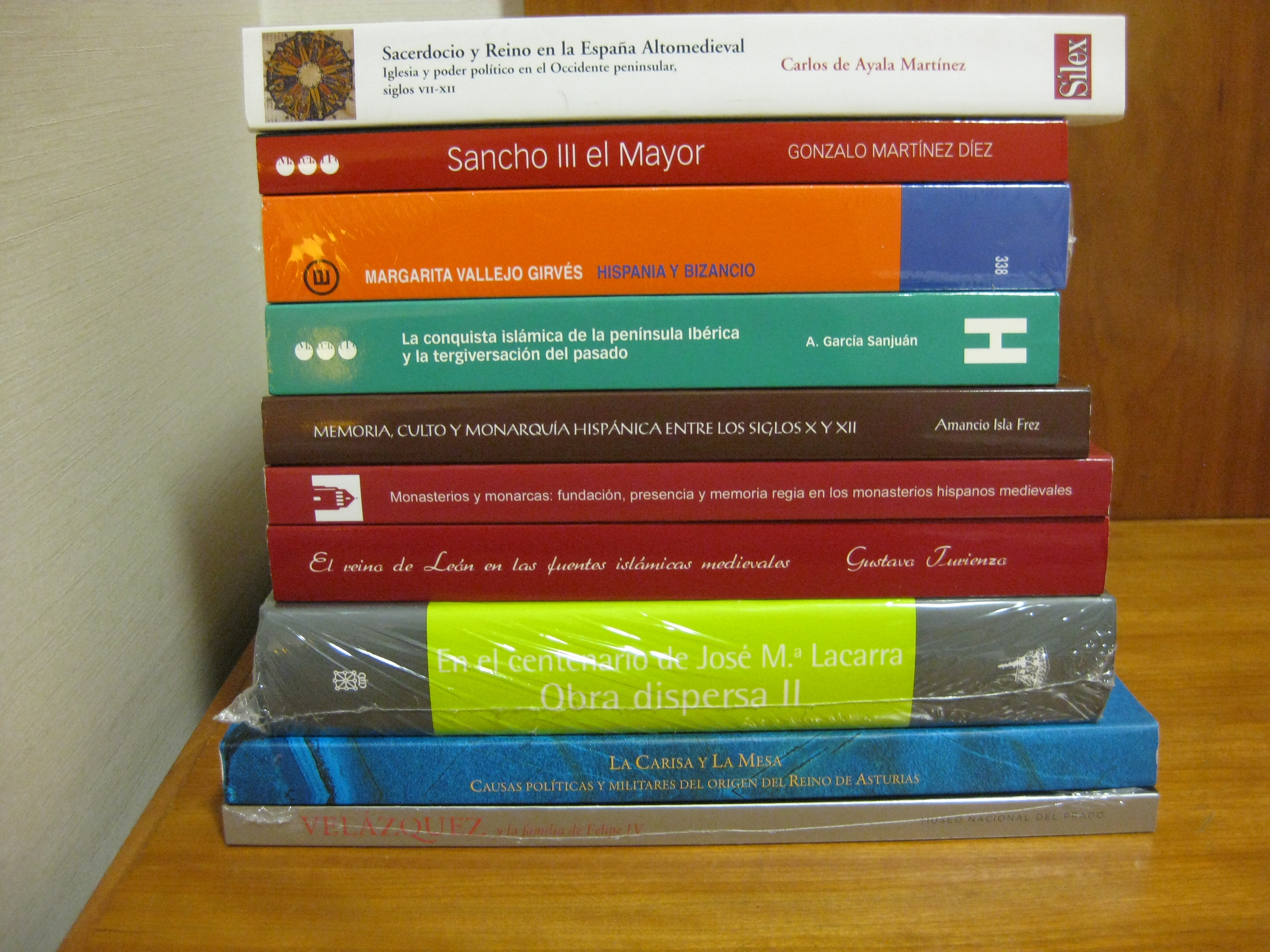
New Books --- Madrid 2013
New Books — Madrid 2013

I never posted my stack of books from this year’s used book sale, so by way of compensation, here is a photo of the damage I have done as of my second day in Madrid. All come from Marcial Pons, except the bottom one on Velazquez, which is the catalogue for the special exhibit I saw at the Prado yesterday.

The Man Booker Prize

My friend Nicole posted this article by Michelle Dean onto her Facebook page:

Why the Man Booker Prize Should Keep Americans Out to Keep the Rest of the World In

I found myself identifying with every word in this article, by a fellow expat-in-the-US Canadian, to the degree that I began to wonder whether I had in fact developed some sort of second identity and had actually written it myself (Anne of Green Gables? Check. AS Byatt and Hilary Mantel? Check. Squishy feelings of treachery the day I got US citizenship? Check. Okay, that is me identifying with David Rakoff.) And I have similar personal reasons for wishing the Booker would remain closed to American writers. Frankly, I don’t find I connect much with American literary writing, past or present, and if I want literary fiction, I tend to turn to a Commonwealth author. It was very kind of the Booker over the last decades to make the best easy for me (and I think this is the place to subtly work in the fact that my cousin Alison Pick was longlisted for the Booker in 2011.)

But I can accept that the Man Booker people are not attending to my interests and desires. They are still making a mistake. The main reason the Man Booker people should not open their prize to Americans, is that it risks making the prize irrelevant. There are already several internationally prominent American prizes for best American book. The Booker risks becoming an also-ran, the Golden Globes of the book world. “We liked it too!” “Yeah, big deal.” Or maybe year after year, they will resolutely not give it to an American; maybe that is part of the point. And then we’ll be subjected to headlines “Americans shut out of Man Booker again,” “Franzen snubbed by Man Booker Committee,” before finally, “First American to win the Man Booker.” Spare me.

How do you feel?

Unsympathetic Characters

I am reading a book now that got all the right reviews and caused a bit of a stir in the more literary corners of the book world when it came out in 2006. Its author is an extremely talented writer, and the book is very clever, but I don’t think I am going to finish it. I don’t like the characters enough to spend more time with them. I don’t like the main characters, and none of the secondary characters are compelling either. I don’t care if they show some sort of growth over the course of the book, or if they just remain in their mean little worlds. Even the cute little kid is whiney and I want him to shut up. There is a skill in making characters so believably irritating that readers want to avoid them…but it may not be the most useful skill.
I am trying to understand why I am reacting this way; why unsympathetic characters are such a turn-off (this isn’t the first book I have put down for this reason) because at the same time, there is nothing I like less than the overly-perfect hero, the kind whom the author demands we love before he has earned it from us by what he does on the page. For the second novel I wrote, I took the most unsympathetic character from the first and tried to figure out why she was so horrible. So it is not that I don’t like edge and ambiguity.
I think that maybe what I am missing from these books is a sense of humour, or, better, a sense of humility (which is the necessary prerequisite for humour). When I speak of a sense of humour, I am not talking about the ability to tell or laugh at jokes. I am speaking of an awareness of the absurdity of the world that prevents us from taking ourselves too seriously. It is something like what Dean Priest says to Emily in Emily Climbs:

A woman who has a sense of humour possesses no refuge from the merciless truth about herself. She cannot think herself misunderstood. She cannot revel in self-pity. She cannot comfortably damn anyone who differs from her. No, Emily, the woman with a sense of humour isn’t to be envied.

Those who can take refuge from the merciless truth about themselves, who think themselves misunderstood, and wallow in self-pity are, frankly, kind of boring. And the characters in the book I am reading take themselves so, so very seriously.
I think, by contrast, of the sort of characters Arthur Phillips writes about. Most of them are fairly unsympathetic in the same way as the ones in my discarded books — they are selfish and self-centred, venal and shallow. But humour pervades the novels, gently poking and prodding the characters, the author, and the readers. The characters are nothing if not ridiculous, and that makes me care what happens to them.

Book Contract

I am feeling a little bit stunned.

Today, I received a book contract. Cuidono Press is going to be publishing my historical novel, Pilgrimage in 2014. No, it wasn’t unexpected — these things take a lot of lead-up time, I have discovered. A Lot. I finished this novel in 2007, just to give you a bit of an idea. I am so grateful to Martha Hoffman, who read it way back then and remembered it, and asked me if I would publish it with her new small press, and I am also so grateful to Stephanie Cabot, my agent, who has been with me through all those long years and never gave up.

Since it has been a long journey, and since I have a hunch that maybe everyone (or is it only every academic historian?) would secretly like to write a novel and get it published, and wants to know how such a thing can happen, I think over the next few days and weeks, I’ll tell the story of the path that I took to get here. Watch this space.

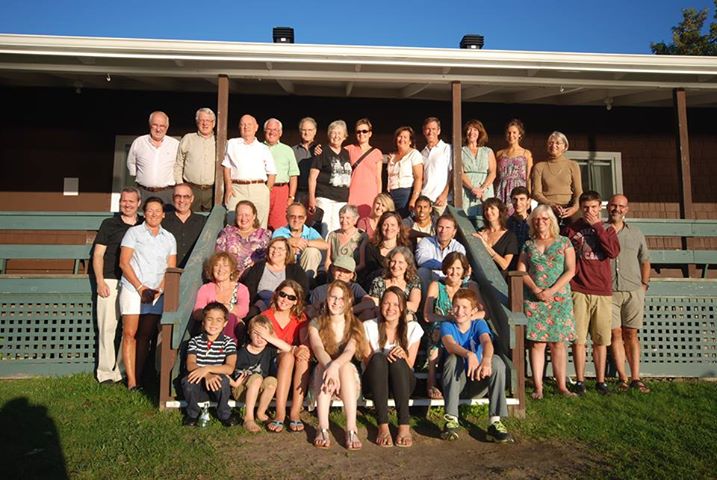
Something from the Pick Reunion, August 2013

“I am who I am”
God to Moses in Exodus 3:14

Thomas asked me to say a little bit about Jewish life in Czechoslovakia in the seventeenth and eigtheenth centuries, and though I know almost nothing about the subject, I was able to find out a few interesting things. Our ancestors lived a life then that was very much like our images of the Eastern European shtetl, albeit less romantic than the Fiddler on the Roof. They were restricted as to where they lived, they paid extra taxes, spoke Yiddish, had no secular education, were limited in the professions they could follow, and were under the tyranny/loving care (depending on your perspective) of their rabbis who were both religious and social leaders.

I had always believed this changed with the emancipation of the Jews under Emperor Joseph and the internal Jewish Enlightenment that was a consequence of the broader European Enlightenment. At this time, there began a process of Germanization of the Jews of Bohemia. They were allowed to join the army, they were required to take German last names, and became part of a secular, German educational system.

But until 1848, Czech Jews were not permitted to live anywhere but a few restricted towns, and only the eldest son was permitted to marry, in a move designed to reduce the number of Jewish families in Bohemia. Only after this date did these things change and over the next fifty years, the lifetime of Leopold Pick, our family went from being something none of us could recognize to the people we know and knew: industrialists, forward-looking, risk-taking, embracing modernity and technology and science, internationalists, and embracing both Czech and German culture. Jews moved into German-speaking areas of Bohemia, and took on German culture, and later Czech culture, when the country of Czechoslovakia was founded out of the rubble of 1918. (Though as an older woman at a lecture once told me, “You know, the only people ever to call themselves Czechoslovakians were the Jews.”) Ruzena Bondy’s prayerbook, written in German with some Hebrew, but with her own writing in Czech shows how she moved between three cultures.

Our name shows traces of these three cultures. Early on it was written Pik (Czech). We know it as Pick (German). Jan told Thomas a story that it comes from a Latin acronym: Peregrinus Iudeae Confessionis (with the K added for pronunciation). This means, “Traveller/Wanderer of the Jewish Faith” — figuratively perhaps, the Wandering Jew. It matters less what its “true” etymology was than what his story says about himself, how he saw himself, and what he taught his sons about who they were. Under the Czech/German sound of the name, there remains a sense of being always Jewish.

Thomas also told me a story about Edmund Pick owning orange groves in Jaffa. In Israel in 2011, I had a chance to do some digging on the Israeli site dedicated to the restitution of Holocaust property, and I discovered Edmund had bought a share or shares in the Jewish Colonial Trust, set up to promote Zionism. With his right hand, he was starting a factory in Czechoslovakia; with the left he was investing in a Jewish state. In a very real sense, Edmund and then Jan knew they were Jewish and this knowledge enabled Jan to save his immediate family. The “Peregrinus” in his name reminded him that his destiny did not have to be in Bohemia.

Our ancestors were Jewish and Czech and German, and we too are products of all the cultures and traditions and strains that have influenced us, the people who raised us, and where we have been since. We are from Canada, Britain, Argentina, the United States, and the Czech Republic. We are Jews and Catholics and Protestants and atheists. We speak English, French, Spanish, and Dutch. We are not half anything or a quarter anything. We live freely and we don’t need Adolf Hitler or a bureaucrat in a government office or a rabbi in a black hat to tell us who we are. We are all of us who we are.

Picks August 2013
Picks August 2013

Canada, by Canadians

In my tradition of annual Canada Day videos, this is a kind of cool little video that I first saw shared by another Canadian expat friend on FB. The Canadian Tourism Commission asked for footage from Canadians about their country which they then strung together in a short promotional film. It may or not be a representative image of Canada — what it certainly is, is a representative image of how Canadians see their own country, which is even more interesting, to my mind.  I think it is worth asking my American friends, as your big day comes up on the 4th, if there were a such thing as a United Stated Tourism Commission (which there isn’t, of course) and it asked its citizens to come up with a video showing off your country, what would that look like? And anyone elsewhere who would like to play.